

The Daily Vroom
Are Sellers Loyal Anymore?
Over the last year there’s been a subtle but meaningful shift in seller behavior that I don’t think gets talked about enough, and it’s only really obvious if you follow the actual sellers as much as the cars, because the same names that used to show up almost exclusively on one platform are now scattered across multiple venues without much fanfare.
Not because anything blew up. Not because someone made a big switch. Just because the math changed.
Historically, most of the powersellers gravitated toward a single home base, and once they built momentum there it made sense to keep feeding the same machine, since the audience was established and the process was familiar. If something didn’t sell, you simply ran it back. It was comfortable and it worked, so nobody really questioned it.
What’s interesting now is that some of the most sophisticated operators aren’t thinking that way anymore, which wasn’t the case last year.
Last week’s powerseller story captured this perfectly. This is someone who still sells a ton of cars through Bring a Trailer and isn’t “leaving” by any stretch, but when Hagerty Marketplace started leaning in with better terms, more attention, and a clear effort to actually win the consignments, he simply started placing his re-listings there as well. There was no grand strategy or philosophical shift behind it. It was just common sense. If one platform is working harder and the deal looks better, you send them cars. (the deal could mean quicker listing, no seller fees, lower reserve etc..)
Since then I’ve had plenty of emails from other powersellers saying the same thing. They’re trying different platforms, spreading inventory around, and in many cases choosing the venue first rather than defaulting out of habit, because they’re looking at each car individually and asking a very straightforward question: where does this have the best chance to sell well right now?
That’s a very different mindset than loyalty. It’s professionalization.
When you’re moving real volume, this becomes a numbers game. You care about who has the deepest bidders for that type of car, who actually supports the listing, who consistently delivers strong results. Everything else is secondary. We’ve seen this forever on the live side where Barrett-Jackson can move a lot of cars but not always at the strongest prices, while other like Gooding wins by matching the right cars to the right room and focusing on execution, otherwise you get into a bidding war, which all the live auction platforms consistently do. Online auctions are simply maturing into that same reality.

This 2012 E63 AMG P30 fits neatly into that story because the seller behind it is exactly the type who lists everywhere. There isn’t a single home base or default channel. Cars show up across different platforms depending on where he thinks each one has the best shot, which makes the placement feel less like a statement and more like a tactic. It’s a clean, desirable, enthusiast-friendly AMG with the right spec and history, the kind of car that should work in almost any room, so trying it with different audiences is simply part of the process.
Zooming out, the bigger takeaway is that the balance of power is slowly shifting. The sellers who control meaningful inventory are not all acting like fans of any one platform anymore; an increasing amount of them are acting like operators who treat platforms as tools. If one works harder, they get the car. If another has better buyers for a segment, they get the next one. Loyalty doesn’t really factor into it.
There’s probably a deeper article waiting to be written about just how much leverage these powersellers actually have, because a handful of them drive a surprising amount of supply and have built brands strong enough that buyers follow them as much as the venue. If they ever truly leaned into that leverage, the market would look very different pretty quickly.
For now, this AMG is simply another small, very telling data point that confirms the trend: less loyalty, more strategy, and sellers placing cars wherever they think they have the best opportunity to sell tomorrow.

|
🛑 STOP! |
|
If you’re enjoying The Daily Vroom, then please pay it forward by sharing this newsletter with an automotive aficionado in your circles. Your endorsement allows us to accelerate our growth. Send them to thedailyvroom.com to subscribe for free. |
Auctions To Keep An Eye On

We don’t feature a ton of cars from Hemmings, and honestly that’s probably more on me than them, because every time I spend real time on the site I come away thinking the same thing I’ve written a few times before, which is that they have huge potential if they can simply stack more high-quality, enthusiast-grade inventory and create a little more daily momentum around the auctions.
The brand is already there, the trust is already there, and the audience absolutely exists, but auctions are ultimately a supply game and the platforms that feel exciting are the ones where you show up and consistently see cars you actually want to buy, not just cars you politely scroll past.
When Hemmings gets the listings right, it clicks immediately, and this truck is exactly what I mean.
This 1956 Chevrolet 3100 restomod is the kind of build that doesn’t need a paragraph of justification or some complicated provenance story, because it just looks right at first glance and gets better the more you read into it, which is usually a good sign that someone built it to drive rather than to impress a judge with a clipboard.
It’s finished in that perfect aqua that screams mid-century Americana without feeling cartoonish, paired with an aqua and white interior that leans into the vibe without going overboard, and it sits on Torq Thrusts with the exact stance you’d want, low enough to look tough but not so slammed that it feels unusable, which immediately tells you this isn’t some trailer queen cosplay truck.
Under the hood is a properly warmed-over 283 small-block with real hot-rod hardware instead of fluff, including a solid-lifter cam, roller rockers, Edelbrock intake, Holley carb, MSD ignition, headers, and all the usual supporting pieces, and it’s backed by a T5 five-speed, which in my opinion is one of the most underrated upgrades you can put into an old pickup because it turns something that used to feel like a farm tool into something you can actually cruise at modern speeds without feeling like you’re wringing its neck.
Then you look underneath and realize they didn’t cheap out anywhere, because it’s running Mustang II-style front suspension, a four-link rear, coilovers, Wilwood discs at all four corners, modern wiring, power steering, air conditioning, and basically every “while we’re in there” improvement you’d make if the goal was to build one really good truck and keep it forever.
That’s the sweet spot for me. Not numbers-matching precious. Not overbuilt SEMA excess. Just clean, usable, properly sorted.
The kind of vehicle you’d actually take out on a Sunday morning or drive to dinner without thinking twice.
And that’s exactly why I think Hemmings has such an opportunity, because this type of inventory is what creates daily habit and repeat traffic. You don’t need ten million dollar Ferraris to make a platform interesting. You need cars that enthusiasts instantly connect with, cars that feel attainable and fun and real, and if Hemmings can consistently surface trucks and restomods like this alongside their traditional classics, they’ll surprise a lot of people.
For me this one isn’t complicated at all, it’s just a really well-done old Chevy pickup with the right engine, the right gearbox, the right stance, and the right vibe, which is usually more than enough to make it a good buy and a great driver.
Sometimes it’s that simple.

I haven’t written about flip cars in ages, mostly because that whole “buy it today, list it tomorrow, make easy money” phase quietly disappeared, but every now and then one shows up that perfectly illustrates how unforgiving the numbers have become.
This 2026 G63 is exactly that.
The seller reportedly bought it new around $219k, and today it’s already back on the market with delivery miles and a bid hovering just under that number, which sounds close until you remember that MSRP isn’t the real cost. Taxes, dealer fees, registration, and all the usual new-car friction mean the actual check was almost certainly well north of sticker, and once you factor selling fees on the way out you realize there’s still a meaningful gap to close just to get back to even, never mind actually “flip” it.
That’s the reality with these now. The margin isn’t the difference between sticker and hammer. It’s the difference between what you really paid and what you really clear.
And that gap is a lot smaller than people think.
What makes it interesting is that if you were going to try this strategy, you couldn’t pick a better candidate. Hyperblue Magno over Platinum White is a killer spec, the latest G63 still delivers the full AMG theater with a 577-hp twin-turbo V8 and every luxury box ticked, and with basically no miles it’s as clean and liquid as inventory gets. It’s spectacular, desirable, and exactly the kind of truck that always finds a buyer.
It’s just a reminder that even the most “can’t lose” modern cars still have to fight the math, and these days breaking even is sometimes the real win.
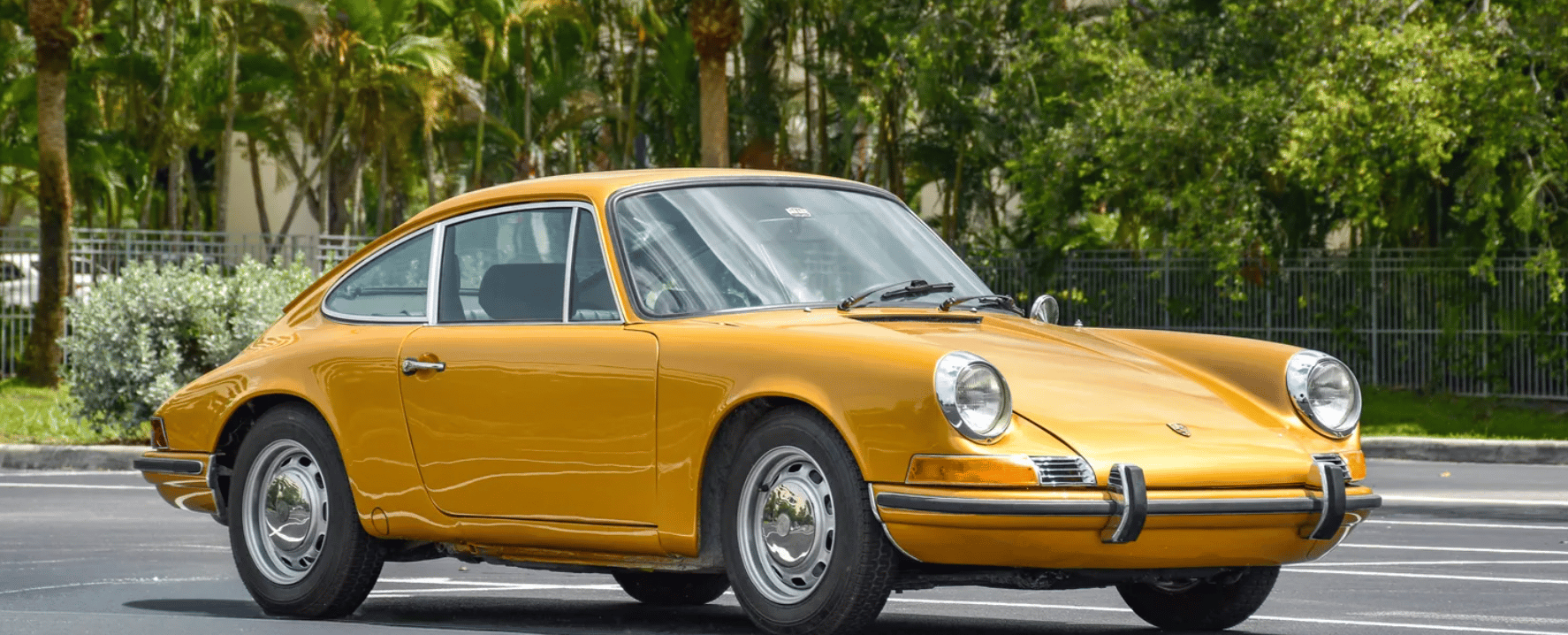
This one isn’t dramatic or controversial or some big story car, which is probably exactly why I like it, because it’s just a very straightforward early 911 that quietly checks almost every box enthusiasts claim they care about.
And honestly, I think it’s just early. Right now the bidding looks sleepy, but this feels like the type of auction that compresses all the action into the last day or two when the serious buyers finally show up, not something that explodes out of the gate.
The car itself is too fundamentally solid not to get there.
You’re talking about a 1971 911T, which means long-hood, light weight, carbureted, air-cooled, five-speed, and from the final stretch of the old-school 911 formula before things started getting heavier and more insulated. Add in roughly $70k in documented restoration work, a rebuilt numbers-matching flat-six, fresh Webers, records, and a Porsche Certificate of Authenticity, and suddenly this isn’t some romantic project car, it’s a sorted, turnkey driver that someone already spent the money on.
That’s usually what people want but don’t want to pay to create themselves.
Because doing a restoration like this today costs real money and real time, and buying one that’s already done is almost always cheaper and easier than trying to build it yourself.
The spec is right too. Gold Metallic over black feels perfectly period and refreshingly un-fussy, and the whole thing has that simple, honest look that makes early 911s so appealing in the first place. No wings, no nonsense, just thin glass, skinny tires, manual everything, and that little flat-six singing behind you, which is basically the definition of analog Porsche.
From a market perspective, the math is pretty straightforward. Early long-hoods with matching engines and documented restoration work don’t live at bargain numbers for long, especially when they’re clean drivers rather than question marks, so my guess is this one just hasn’t hit the part of the auction where people start leaning in yet.